
Non-U.S. Currencies Rise, but Only the Yen Struggles to Strengthen?

Morning FX
The U.S. Index—when one whale falls, non-U.S. currencies thrive. However, while the euro, the Australian dollar, and the yuan have made notable gains, the yen remains unmoved at high levels, as if in deep meditation, seemingly unaffected by the turmoil in global forex markets.
1. In what aspects does JPY’s weakness manifest?
It’s evident in every way.
First, spot: After favorable news emerged from the US-Iran negotiations, EUR, AUD, GBP all posted gains of about 300 points, while USDJPY managed only a movement of 150 pips at most—hardly anything remarkable.
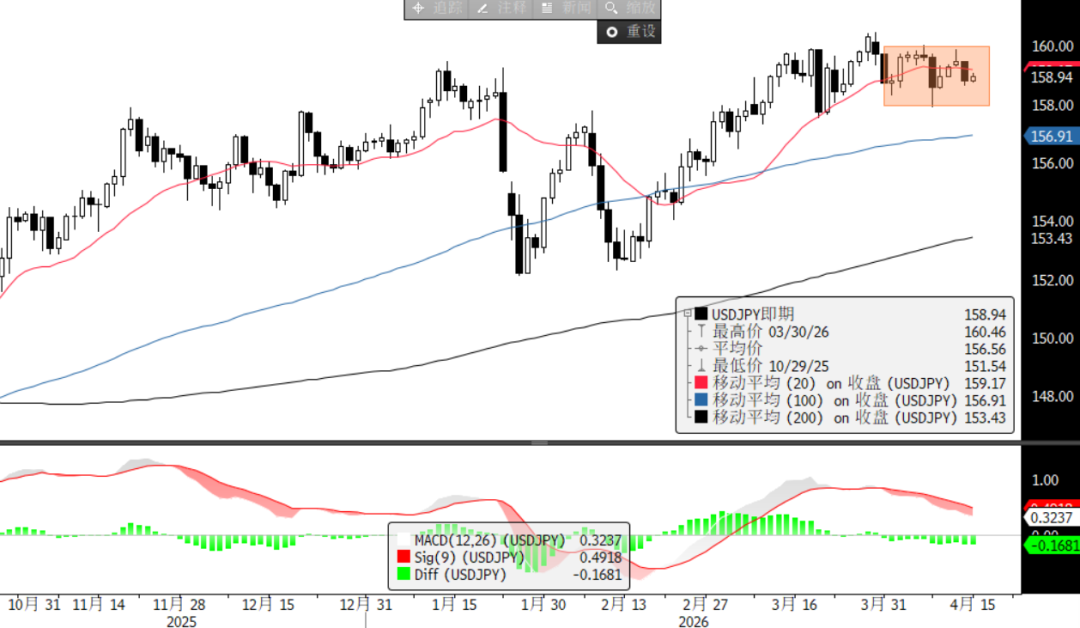
Next, options: The volatility curve for USDJPY within 1Y has dropped to lows not seen since July 2024. What does this mean? Before July 2024, the U.S.-Japan interest rate spread was high and carry trade activity was at its peak. Now, the spread has narrowed by more than 240bp compared to then, but the spot position and volatility are nearly identical to those levels.
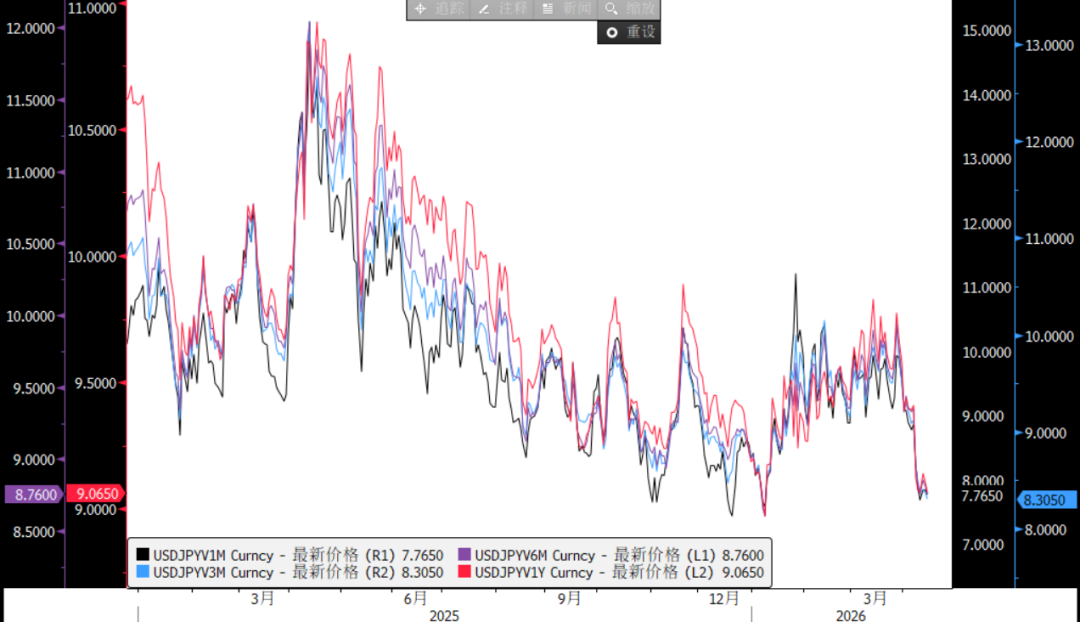
USDJPY RR has also reached its highest level since 2024; the options market simply does not believe the yen has any room for appreciation.
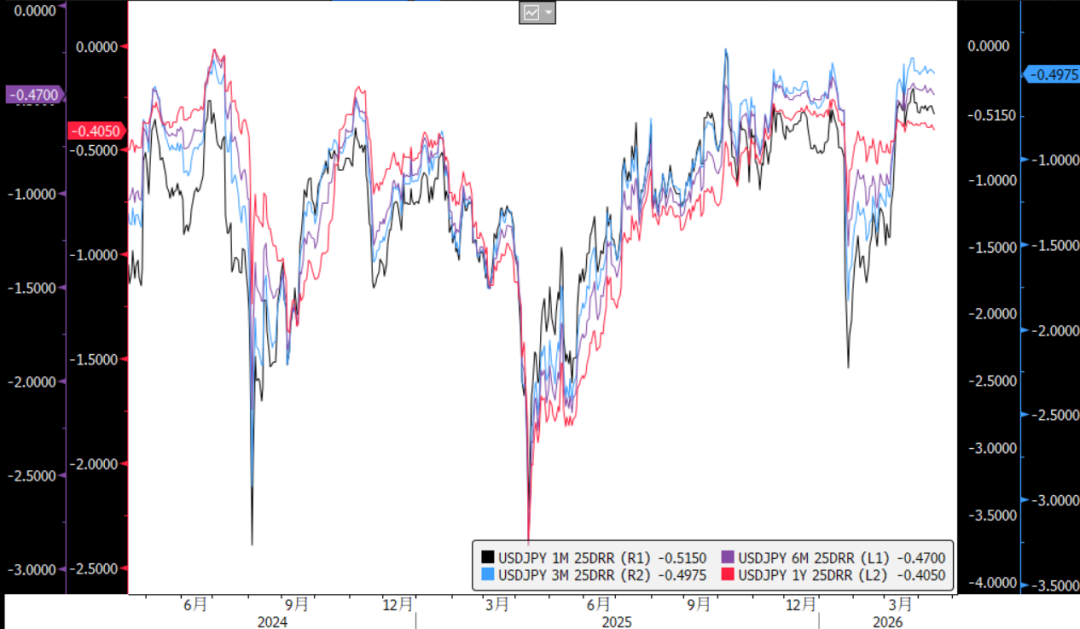
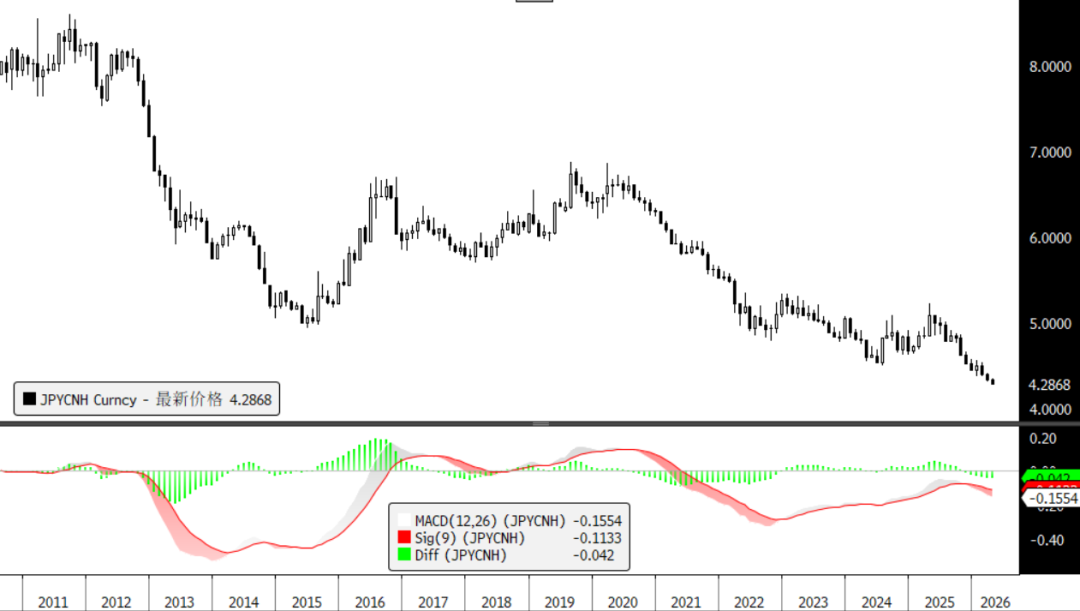
Finally, cross pairs: Even if USDJPY doesn’t hit new highs, yen crosses do. Pairs like EURJPY and AUDJPY have recently hit new highs unseen in the 21st century. CNYJPY keeps setting historical records, which is certainly a blessing for companies and individuals with yen purchase needs.
2. What are the sources of JPY’s weakness?
(1) Fundamentals: With US-Iran negotiations ongoing but the Strait of Hormuz closed, JPY—a safe haven currency and a country highly reliant on oil imports—is hurting the most, enduring a “double kill” of heightened risk sentiment and high oil prices. Meanwhile, elevated oil prices are dampening expectations for further rate cuts by Western central banks, and Europe is even preparing to fast-track rate hikes. Thus, JPY can no longer enjoy the monetary policy convergence advantage it did in previous years.
(2) Intervention: Although USDJPY didn’t break above 160, yen crosses continue to hit new highs, and the MOF could intervene—or at least threaten to do so verbally. However, the Japanese government has been silent lately, showing no intention to intervene. Perhaps they realize that with Japan’s current fundamentals, intervention is nothing more than handing out money and providing opportunities for the market to short the yen; merely treating the symptom but not the cause.
(3) Carry trade: As mentioned above, declining volatility has made USDJPY’s carry/vol more attractive, allowing carry traders to further increase their JPY short positions.
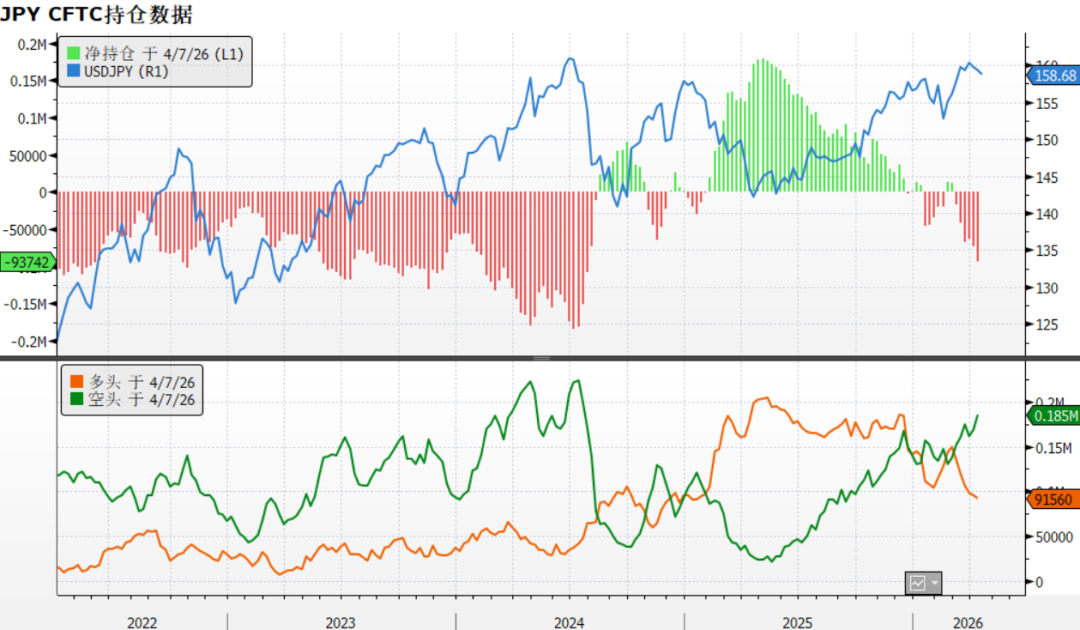
3. What to trade in JPY?
(1) Bet on appreciation: With USDJPY RR and spot both high, and the 160-162 zone being a high-risk intervention area, try rolling short-term sell RR trades and hope for an intervention/BOJ rate hike/recession squeeze.
(2) Earn carry (bold version): Personally, I prefer to go long on AUDJPY, which has the thickest carry and the best upward spot trend. However, AUDUSD is at a relatively high level, so any pullback would provide a better opportunity to add positions.
(3) Or simply do nothing. Isn’t it better to spend your time studying currencies other than JPY?
Disclaimer: The content of this article solely reflects the author's opinion and does not represent the platform in any capacity. This article is not intended to serve as a reference for making investment decisions.
You may also like

SpaceX rebounds over 9%, Musk says: Q4 revenue expected to grow by 70%, aiming for 500 billion next year
SpaceX's stock price surged as much as 9.1% on Friday. At the Barron’s Investment Conference, Elon Musk predicted a 70% quarter-on-quarter revenue increase for Q4 and reiterated the goal of reaching $100 billion in annualized revenue within the year, expecting this number to exceed $500 billion by the end of 2027. In addition, the share of government contracts is expected to drop from 16.6% to below 10%. However, despite the short-term rebound, the stock has still declined by over 28% in recent months.
AI "New Cloud" rebounds sharply after overselling, quickly cooling down! CoreWeave briefly switched from gains to losses, IREN's gains slashed by half
On Thursday, US stocks in the AI sector experienced a sharp sell-off, with CoreWeave, Nebius, and IREN dropping by approximately 10%, 15%, and 17% respectively. After Thursday's close, IREN's earnings report exceeded expectations with significant revenue growth from its AI Cloud business. Combined with a broad rebound in tech stocks on Friday, US pre-market saw CoreWeave up 9.3%, IREN up 24.6%, and Nebius up 13.7%. However, during the US market midday session, American media reported that Microsoft will not renew part of its computing power lease with Oracle, once again dampening the slightly improved market sentiment and narrowing gains in the Neocloud sector.

1998 VS 2000, Goldman Sachs executive: AI sell-off resembles LTCM crisis rather than the internet bubble, but key questions remain unanswered
Goldman Sachs Delta One Trading Head Privorotsky is more inclined to compare the recent sharp decline to the 1998 LTCM crisis, which was a liquidity shock. At that time, the fundamentals of US economic growth remained sound, and once liquidity was restored and the Fed cut rates, the market quickly recovered its losses. However, the current market does not have the support of Fed rate cuts. Privorotsky also pointed out that the real issue for AI now is whether revenues can ultimately match the capital invested, a question that remains unanswered.

Crypto prices
More


