
Capacity Lockdown, Fully Booked Orders, Price Surge: The Probe Card Business Becomes the 'Golden Shovel' of the AI Era Amid the Computing Power Boom

1. What Happened? — The Surge in AI Hardware Ignites Probe Card Demand
1. The Global Semiconductor Probe Card Leader Reaches Record Quarterly Revenue:
FormFactor delivered an exceptionally strong performance in Q1 2026, exceeding market expectations across multiple metrics:
Record Revenue: First quarter revenue reached $226.1 million, marking a 32% year-over-year increase.
Profit Soars: NON-GAAP gross margin jumped to 49%, with NON-GAAP earnings per share at $0.56, far surpassing the previous estimate of $0.44.
2. Core Growth Drivers Behind Explosive Results and Share Price Surge: AI Compute Power and HBM Memory
Management made it clear that the current outperformance is primarily driven by the hardware demands of generative AI:
HBM Demand Doubled: DRAM revenue from Korea (mainly SK Hynix and Samsung) grew significantly, with HBM (High Bandwidth Memory) probe cards being the core contributor. FormFactor's 2026 capacity has been fully booked, with orders scheduled through year-end.
Compute Network Chips: Probe card demand for Foundry & Logic (contract manufacturing and logic chips) used in data center networks and AI clusters has surged.
2. Why Is It Important? — Both Volume and Price Rise: HBM and CPO Redefine Test Economics
1. Probe Cards: The “Strategic Fortress” of Wafer Testing
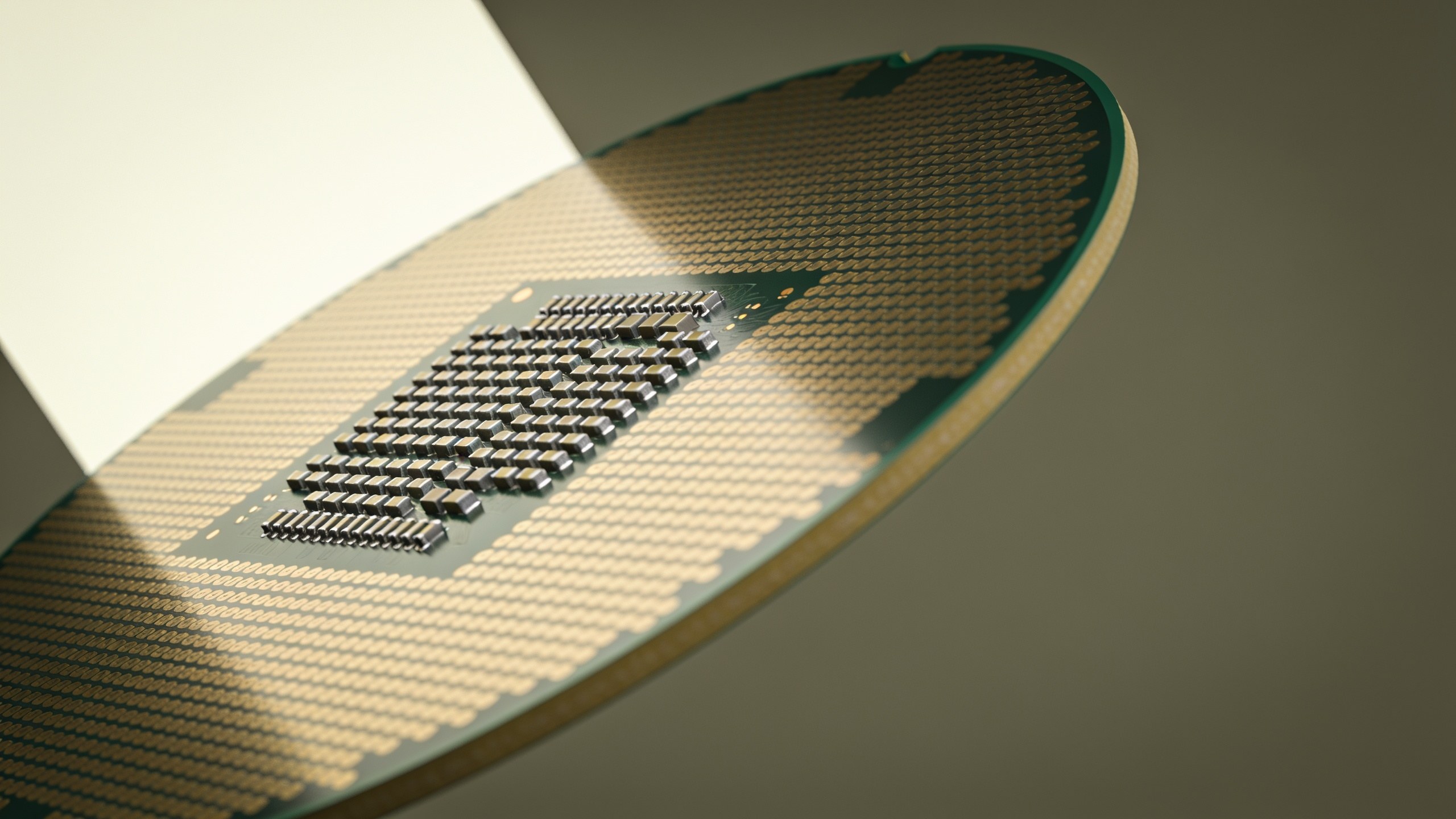
A probe card is a “consumable” hardware interface used in the semiconductor wafer test (CP) phase. Its function is to establish a temporary and precise electrical connection between the expensive Automatic Test Equipment (ATE) and thousands of micron-sized pads on the wafer for functional and performance screening. In simple terms, the probe card acts as the “first gatekeeper of quality inspection” before a chip leaves the fab for the packaging house. Its performance directly determines test accuracy, efficiency, and the final yield of chips, making it an indispensable cornerstone of the semiconductor industry chain.
The technical barriers for probe cards are extremely high. They must integrate thousands to tens of thousands of probes, each with a diameter less than one-tenth of a human hair, into a space no larger than a fingernail, and all the tips must maintain micron-level co-planarity (often requiring errors smaller than 25 microns) to withstand extreme electrical, thermal, and mechanical precision challenges. This makes probe cards a customized “masterpiece” that combines precision mechanics, material science, and electronic engineering.
……
Disclaimer: The content of this article solely reflects the author's opinion and does not represent the platform in any capacity. This article is not intended to serve as a reference for making investment decisions.
You may also like
When France and Germany pay for their deficits, fiscal discipline becomes the "moat" of the UK bond market; investors are positioning in advance for a rebound in gilt bonds.
Investors are betting that the new UK Chancellor, Healey, will uphold fiscal discipline and are purchasing gilts in advance. A smooth and steady budget plan is expected to turn the UK from a "risk" in the bond market into a "positive."
Anthropic's $2 Trillion IPO Faces Doubts: Risks of Mismatched Computing Commitments and Revenue
The independent institution New Constructs reported that the Anthropic IPO is absurd, with a valuation of only 150 billion. The main controversy lies in the mismatch between long-term computing power commitments and clients' short-term on-demand procurement models, coupled with macroeconomic headwinds and early investor sell-off pressure, leading to increased market volatility.

Anthropic allocates 5% of shares to set up a fund before IPO, Musk calls for direct distribution to the public
Anthropic announced the establishment of a public welfare fund, initially allocating 5% of its shares. When the company's valuation increases by 50%, another 2% will be added. The aim is to address the impact of AI on employment. Musk suggested directly distributing shares to the public.

AI Stocks Struggle to Rebound: Lacking Three Major Supports, July’s Rally Hard to Replicate
JPMorgan pointed out that due to the absence of ETF bargain-hunting funds, limited room for short covering, and the early termination of the $40 billion buyback by Samsung and SK Hynix, the rebound strength of AI stocks in October may not match that of July. The resurgence of leverage risk could intensify volatility.
Crypto prices
More


