
Foreign media: ATOM rebound is hindered, price falls back to around $1.41

According to foreign media, Cosmos token ATOM, after years of decline, reached a new low of around $1.25 this year. Although the price subsequently rebounded to around $1.60, the rally did not continue, and it has now fallen back to about $1.41. The market remains cautious about the extent of its recovery.
Falling from the $44 high to an all-time low
The article mentions that since ATOM’s peak near $44 in 2021, it has been in a long-term downtrend. By 2026, the price had dropped to around $1.25, marking a new all-time low.
At the end of 2025, ATOM was still trading above $2, and some traders expected this area to become a new accumulation zone, similar to the lows in 2020. However, the following price action did not confirm this assumption, and previous support levels failed to attract sufficient buying interest.
Limited strength in short-term rebound
Looking at the price action of the past 180 days, buying activity recently pushed ATOM up from around $1.25 to approximately $1.60. However, this rally quickly gave back part of its gains, with the price returning to about $1.41.
The article suggests that while the rebound indicates there is some demand at lower levels, compared to the previous sharp declines, the strength of the rebound remains weak and is not enough to indicate a trend reversal for now.
200-day moving average remains a key resistance
Currently, ATOM is still trading below the 200-day moving average, and this area continues to serve as significant resistance. The article believes that without more sustained buying, the current low cannot be considered a solid bottom.
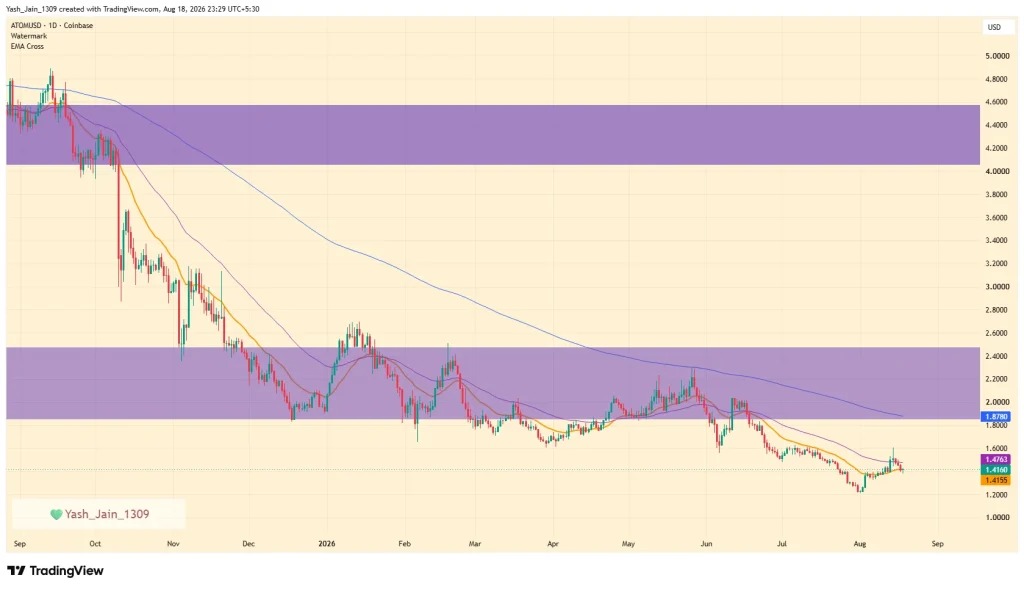
According to the article, ATOM has dropped about 96% from its all-time high. If the overall market environment does not improve, the price may continue to face downward pressure, with even further downside risk possible.
Disclaimer: The content of this article solely reflects the author's opinion and does not represent the platform in any capacity. This article is not intended to serve as a reference for making investment decisions.
You may also like
BUZZ - Rocket Lab’s stock falls as quarterly loss exceeds expectations
BUZZ-Take-Two shares rise after raising annual revenue and profit forecasts
Itaúsa Q3 2026 recurring net profit rises 25% to R$ 5.06 billion year-on-year
The US FDA requires semaglutide, tirzepatide, and other GLP-1 drugs to include new warnings about the risk of eye disease.
NAION is an eye disease that can cause sudden, painless loss of vision, with some patients potentially experiencing permanent visual impairment. The drugs involved include products from Eli Lilly and Novo Nordisk. According to analysts at Citi, the incidence of NAION is relatively low, and given the significant benefits of GLP-1 drugs in weight control and blood sugar management, the actual impact on prescription behavior is expected to be limited. On Monday, the stock prices of Eli Lilly and Novo Nordisk increased, with the news not causing any significant impact on their share prices.
Crypto prices
More


