
Blue Wave Kicks the AI Bull Market Off Its Feet: Nasdaq Plunges 5.5% Into Correction — Wall Street Went From Celebration to Doubt in Just 24 Hours. Click to See the Full List of Potential Beneficiaries!
 2026/11/06 03:45
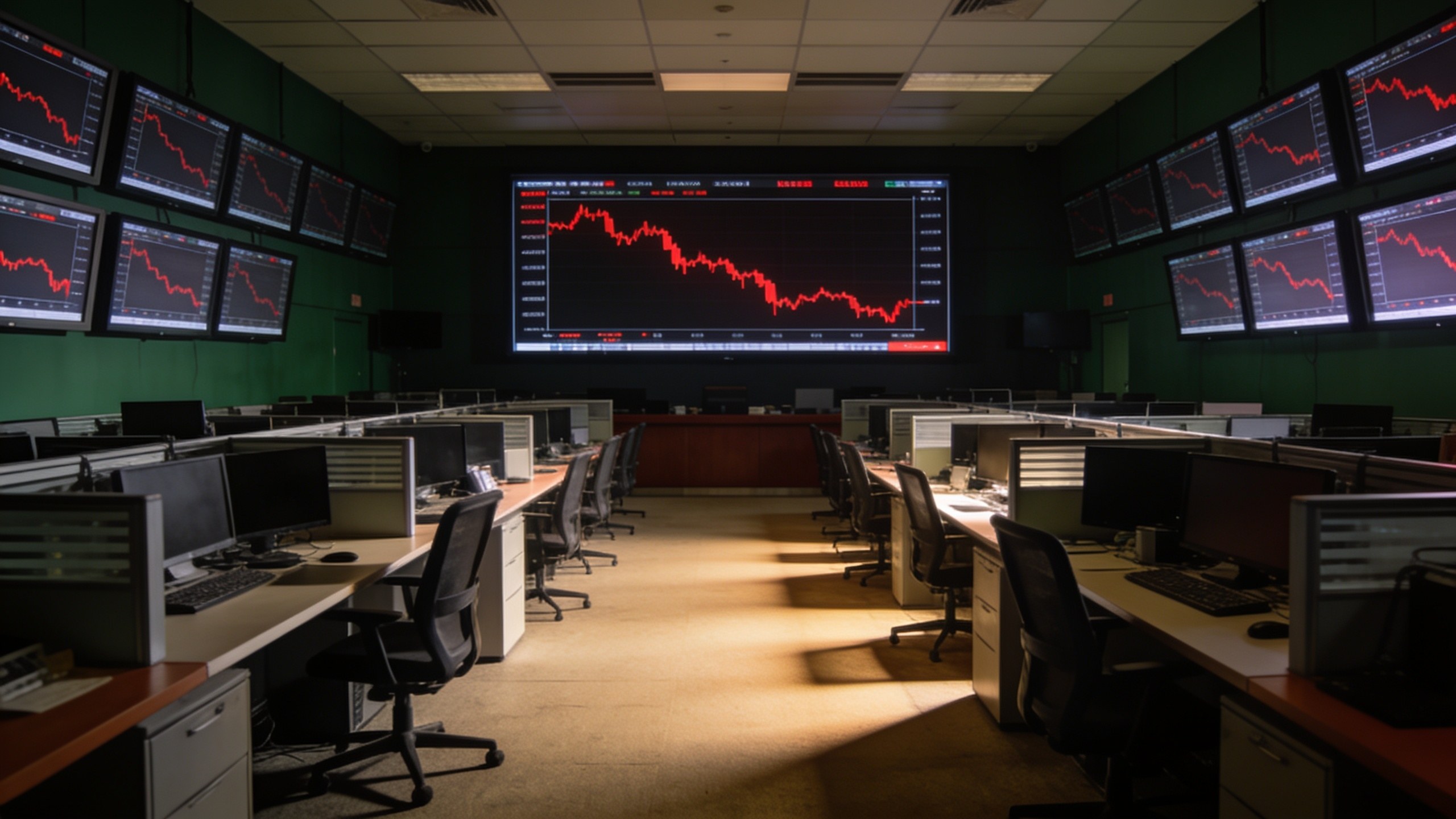
On November 5 (Thursday), US stocks suffered their most brutal single-day adjustment since the April 2025 “Liberation Day” tariff shock. Markets that were still celebrating the Democratic “blue wave” the day before completely reversed and erased all those gains overnight.
The Dow plunged 1,833 points (-3.44%), the S&P 500 fell 4.36%, and the Nasdaq dropped 5.52%, officially entering a technical correction. The Philadelphia Semiconductor Index crashed about 12%, its largest single-day decline since 2020. In one day, the S&P 500 and Nasdaq together wiped out roughly $5 trillion in market value, setting a single-day record. The VIX fear index surged nearly 70% to around 28, as market sentiment flipped instantly from “election settled, we can breathe” to “this thing might actually be turning into a serious problem.”
I. Market Status and Core Drivers
This selloff was not a broad panic, but a highly concentrated “AI infrastructure repricing.”
The chip and data-center-related chain was hit with concentrated selling: Nvidia fell about 9%, wiping out more than $370 billion in market value and basically erasing its year-to-date gains; Micron and AMD both dropped more than 17%; SanDisk fell over 22%; TSMC ADR, Broadcom, Intel and others also declined sharply. Data-center operators (such as IREN, CoreWeave, and Nebius) and power-related names were similarly crushed.
At the same time, Tesla and SpaceX fell about 11% and 9% respectively, forming a sharp contrast with Elon Musk’s earlier heavy political spending in support of Republican candidates.
Wednesday’s rally logic was “removal of election uncertainty + expectations of inflation relief from the sharp drop in oil prices.” After Democrats took control of both the House and Senate, the market briefly believed political gridlock could limit further aggressive policies from the Trump administration. Brent crude plunged nearly 9% on Wednesday to a two-month low, briefly benefiting consumer and non-AI sectors.
But on Thursday, investors reassessed the long-term impact of the election results on AI capital expenditure. Selling pressure spread quickly across US stocks.
II. Actual Impact of the Midterm Elections
In the November 3 midterm elections, Democrats achieved a historic victory: they took control of both the House and Senate and flipped multiple key states. The most market-watched state was Texas — a major hub that accounts for roughly one-quarter of planned US data-center capacity.
Democratic candidate Gina Hinojosa defeated Republican Governor Greg Abbott, becoming the first Democratic governor of the state in decades; Democrats also won the Senate seat and took control of the state House.
Newly elected officials had explicitly proposed pausing or strictly reviewing data-center construction during the campaign, citing power, water, and community impacts. Across the country, multiple localities also passed local referendums restricting data-center development.
The political shift in major data-center states such as Texas and Georgia directly challenged the “unlimited expansion” narrative. Institutions including UBS noted that if local pause policies persist, roughly 30% of the planned new data-center capacity for 2028 faces uncertainty. While projects already under construction for 2027 are relatively less affected, longer-term order expectations have been significantly revised downward.
The market is worried that the GPU and storage demand curve previously driven by tech giants will slow due to permitting, power, and political resistance.
III. What Is Wall Street Doing?
The answer is recalculating.
The previous day’s big rally was essentially a double boost from “election uncertainty removal + the oil price crash.” After Democrats took Congress, the market briefly believed political gridlock could constrain further aggressive policies from the Trump administration. Brent crude plunged nearly 9% on Wednesday to a two-month low, briefly benefiting consumer and non-AI sectors.
Wall Street is conducting a classic “from narrative to reality” repricing. The semiconductor and new-cloud sectors had already begun to show internal divergence on Wednesday; Thursday simply accelerated the process. The bond market strengthened in tandem (yields fell), with capital flowing from high-risk growth stocks into safe-haven assets.
Analyst views are clearly divided:
- On one side, some argue this is a “pressure-release valve” for the AI bubble. Historically, both the railroad and internet bubbles collapsed due to over-expansion; a moderate slowdown in construction could allow demand to catch up with supply and avoid a more violent crash.
- On the other side, some believe short-term order and valuation shocks are hard to avoid, especially for chip and infrastructure companies that are highly dependent on new data centers. Tech giants (Microsoft, Google, Amazon, Meta), which already own large amounts of computing capacity, may actually benefit in the competition — capital expenditure pressure eases and their existing advantages are consolidated.
IV. Current Investment Logic and Potential Beneficiaries
The short-term logic is clear: avoid the heavy and focus on the light, watching the pace of policy implementation:
- Areas to avoid or reduce: pure AI hardware chain (storage, GPUs, optical communications, new-cloud data-center operators), names highly tied to Texas data centers, and politically sensitive “Trump trade” assets. These are the most sensitive to the pace of construction.
- Relatively more resilient or potentially beneficial: large tech giants that already have massive computing capacity (Microsoft, Amazon, Google, Meta) — they rely less on “new project approvals”; some traditional blue-chips and consumer sectors (if oil prices stay low, this benefits consumption, e.g., WMT); and “efficiency-type” AI application-layer companies that may benefit in a stricter regulatory environment, such as PLTR and CRM.
Key things to watch next: the actual intensity of data-center policy execution in Texas and other states, whether federal-level nationwide AI regulation emerges, the evolution of oil prices and the Iran situation (a Democratic Congress may constrain military options, but uncertainty remains), and the actual scale of adjustments to 2027–2028 capital expenditure guidance.
Summary:
The market has shifted from “AI unlimited expansion” to “reassessing the speed of expansion and capital returns.” Historically, the 12 months after midterm elections have often seen decent average US stock performance, but the premise is that fundamentals have not suffered structural damage. With the Nasdaq now in a correction and volatility elevated, the short term is more suitable for controlling positions and waiting for policy clarity, rather than buying the dip or chasing highs halfway.
Disclaimer: The content of this article solely reflects the author's opinion and does not represent the platform in any capacity. This article is not intended to serve as a reference for making investment decisions.
You may also like
Bank of Japan Governor: Inflation Risks Are on the Upside; Unconventional Easing Tools May Be Used Again if Severe Shocks Occur in the Future
Bank of Japan Governor Kazuo Ueda stated that core inflation is expected to remain near the 2% target, with wage growth gradually aligning with inflation. However, rising energy prices have begun to impact consumer prices, and inflation may accelerate further early next year. He also noted that AI has created a positive demand shock, and with a labor shortage in Japan, AI replacing some jobs could benefit the Japanese economy.

Solana DEX volume hits $60 billion, RWA value reaches $5 billion in October 2026

Crypto liquidations hit $1 billion as Bitcoin briefly slips below $75,000

AI concerns hit technology stocks; stock-picking funds such as Tiger Global and Lone Pine suffer heavy losses in October
Due to concerns about AI investment prospects and the impact of the US midterm elections, several leading stock-picking hedge funds suffered heavy losses: Lone Pine lost about 9% and turned negative for the year; Tiger Global fell by 8.5%, erasing its gains; Atreides’ hedge fund plummeted 16%. Coatue bucked the trend with a 0.2% increase, becoming one of the few bright spots. Multi-strategy and quantitative funds experienced relatively moderate declines.
Crypto prices
More


