
GUCCI’s parent company targets the traditional gold business

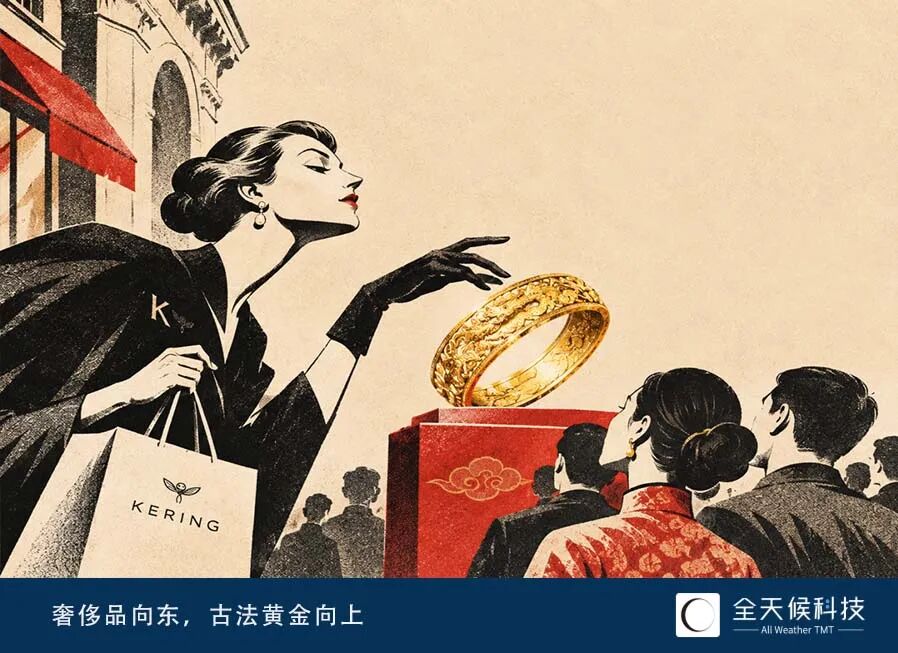
As traditional Chinese gold brands continue to align themselves with luxury goods, international luxury groups are also beginning to move into the Chinese gold market in reverse.
During the 9th China International Import Expo, Kering’s jewelry brand Qeelin officially launched its own gold brand Qeelin GOLD. The first boutique will open on November 20 at Shanghai Grand Gateway Hang Lung Plaza.
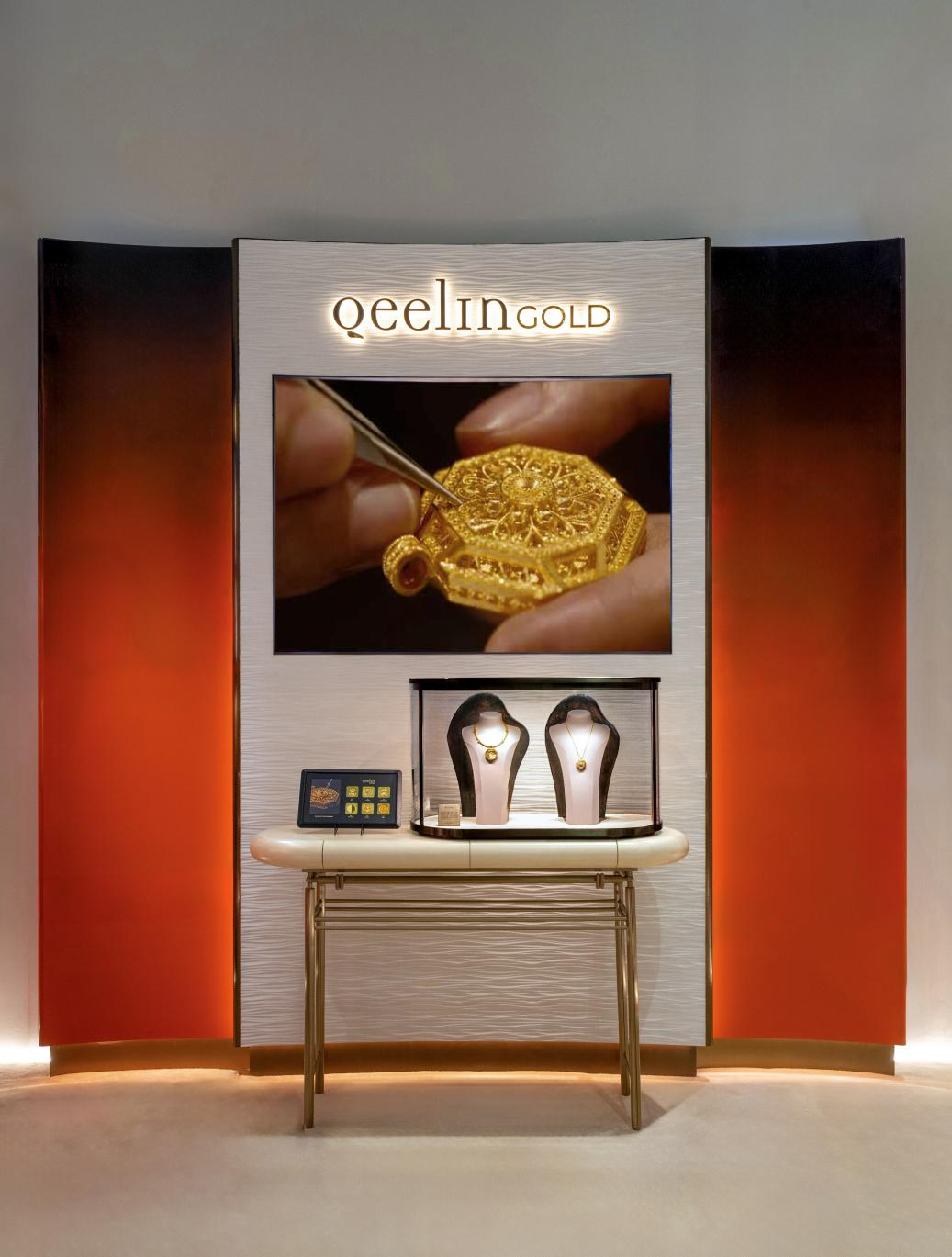
Unlike Qeelin’s previous focus on 18K gold, diamonds, and gemstones, Qeelin GOLD centers on pure gold and adopts a fixed-price model.
Although the brand does not explicitly position itself as “ancient gold,” it incorporates traditional goldsmith crafts such as filigree, granulation, and engraving, which overlap with the craftsmanship systems of indigenous high-end brands like Lao Pu Gold.
This is not Kering’s first venture into the Chinese high-end gold market.
In November 2025, the group participated in Series A financing for local high-end gold brand Baolan. From financial investment to launching an independent brand, Kering is now directly participating in this market’s competition.
The changes reflect the convergence of two forces: on one hand, traditional luxury groups are searching for new growth drivers; on the other, Chinese brands such as Lao Pu Gold are targeting consumer markets traditionally held by international luxury brands through premiumization.
Blue Bloods’ Anxiety for Relevance
Kering is undergoing a prolonged process of operational adjustment.
On October 22, Kering reported its Q3 2026 results. Group revenue reached 3.345 billion euros, a 1% comparable year-on-year decline. Its core brand Gucci earned 1.291 billion euros, down 6% comparably, with directly operated retail revenue down 9%.
Over the past few years, Gucci has been Kering’s primary profit engine. But with global luxury consumption cooling, the brand remains under pressure.
Despite the group’s efforts to drive transformation through changes in creative teams, product structure adjustments, and channel optimization, sluggish demand in markets like China continues to hamper the recovery.
Jewelry is one of the few business units still experiencing growth.
In Q3 this year, Kering’s jewelry business generated 239 million euros in revenue, up 11% comparably year-on-year. For the first three quarters, total revenue reached 760 million euros—a 17% comparable increase.
Last December, Kering announced the phased acquisition of Italian jewelry manufacturer Raselli Franco. In March this year, it established the independent Kering Jewelry division, placing Boucheron, Pomellato, DoDo, and Qeelin under unified management.
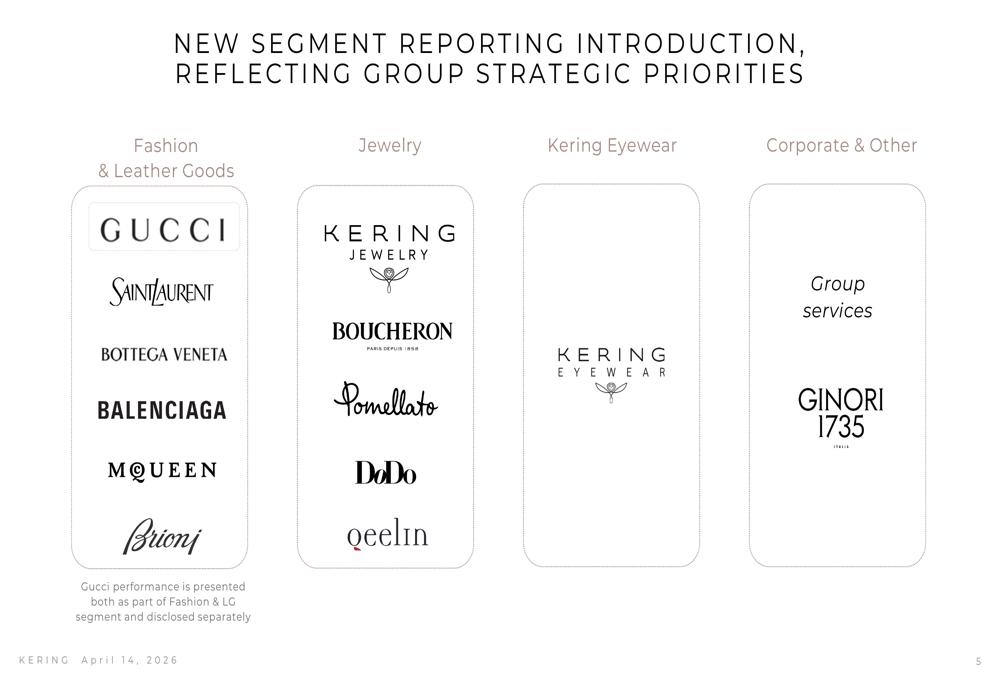
From design and manufacturing to retail, Kering is strengthening the independence and supply chain competence of its jewelry business.
Another significant shift is taking place in China’s high-end consumer market.
In recent years, brands like Lao Pu Gold have used traditional techniques, original designs, fixed-price models, and premium mall distribution to establish brand systems approaching international luxury standards.
From 2023 to 2025, Lao Pu Gold’s revenue grew from 3.18 billion yuan to 27.3 billion yuan—an increase of more than eightfold in three years, with annual triple-digit growth rates and approximately 221% year-on-year growth in 2025 alone.
While traditional gold jewelry consumption is under pressure, high-end crafted gold jewelry still vies for a growing share of spending. Lao Pu Gold’s rise has begun to attract the attention of international luxury giants and financial institutions.
In September 2025, LVMH Chairman and CEO Bernard Arnault made a special visit to Lao Pu Gold’s store in Shanghai’s IFC mall during his store tour in the city.
According to media reports, Arnault and his party spent about half an hour inside, viewing gold jewelry and objects on display. Store staff later confirmed to the media that he did visit Lao Pu’s study room, though he did not make any purchases.
Third-party research cited in Lao Pu Gold’s mid-2026 report showed that the average overlap rate of its customers with those of five international luxury brands rose from 77.3% in July 2025 to 84.6% by August 2026.
This competition is not limited to high-end consumers’ budgets, but is also gradually encroaching on how luxury value is defined.
Historically, European luxury brands built their premiums through brand heritage, design, craftsmanship, and identity. But as prices continue to rise and the consumer environment changes, this narrative faces new challenges.
Chinese high-end gold brands offer an alternative rationale: they also stress cultural heritage and intricate craftsmanship, but their products include a quantifiable value in gold material.
The rise of brands like Lao Pu Gold shows that traditional Chinese culture and craftsmanship can support luxury pricing without relying entirely on endorsements from European luxury identities.
The Gold Trade—Different Paths, Different Destinations
Qeelin is one of Kering’s jewelry brands with the deepest roots in the Chinese market.
Since its founding in 2004, Qeelin has combined symbols of Eastern culture, such as gourd and ruyi, as its design language, using mainly 18K gold, diamonds, and gemstones.
Since joining Kering in 2013, the brand has expanded further in China, with 66 of its 108 global stores located in the Chinese mainland.
Qeelin GOLD’s debut collection continues this long-standing Eastern design language.
For example, the BAJING series draws inspiration from octagonal windows and coffered ceilings found in traditional Chinese architecture. According to Shanghai Securities News, one piece displayed at the Import Expo was priced at 126,000 yuan, and a custom piece at around 450,000 yuan.
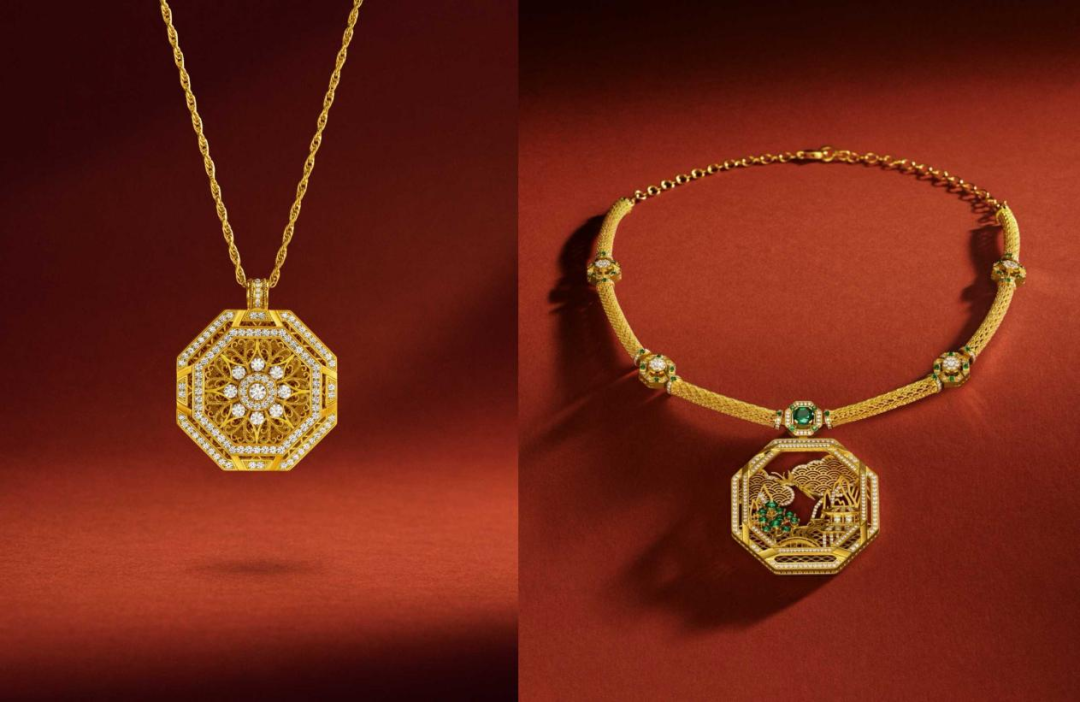
Other collections to be sold in-store include the WULU and FUDAO lines. The former continues Qeelin’s signature gourd motif, while the latter uses bat patterns symbolizing the arrival of good fortune (“fu dao”).
Though Qeelin GOLD has not yet released a full product price range, Qeelin’s existing 18K gold jewelry already overlaps with Lao Pu Gold’s core price band.
For example, a classic Qeelin WULU necklace in 18K rose gold, with red agate and diamonds, retails at 17,800 yuan, comparable to some small carat diamond pendants from Lao Pu Gold.
At higher price points, most of Lao Pu Gold's Tmall flagship items priced over 100,000 yuan, outside of gold objets d’art, are gold bead bracelets or bangles weighing nearly 60 grams, with pendants and necklaces relatively rare.
This suggests Qeelin GOLD may pursue a positioning even higher than Lao Pu’s overall product system, but ultimately, this will depend on the main products and pricing of the new brand.
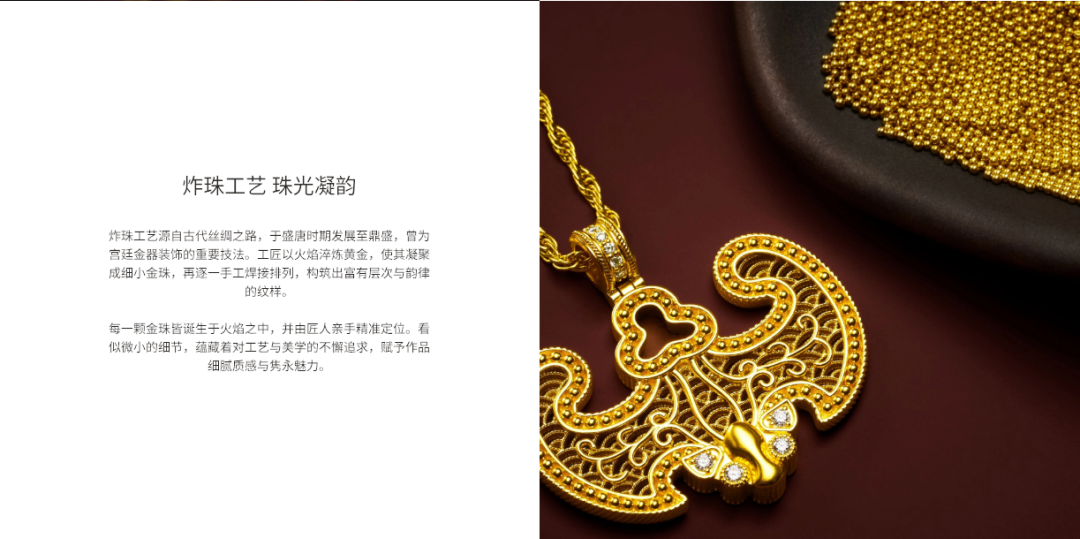
Such differences also extend to each side’s understanding of the gold business.
Despite changes in material and craftsmanship, Qeelin GOLD follows traditional jewelry design logic—centered on cultural symbols, contemporary aesthetics, and wearable jewelry. Lao Pu Gold seeks to expand the gold business beyond jewelry.
Lao Pu Gold’s chairman, Xu Gaoming, previously stated, “Our product positioning means that our high-end clients are not mainly buying jewelry, but gold objects.”
He further stressed that Lao Pu is a full-category brand based on gold material and should not be defined as just a gold jewelry brand.
Beyond jewelry, Lao Pu already offers gold kettles, tea sets, seals, paperweights, ruyi scepters, and other objets d’art and gold display pieces, with individual items ranging from hundreds of thousands to several million RMB.
Despite the different management directions, both types of brands are vying for similar high-net-worth consumers.
Lao Pu Gold is present in top-tier commercial spaces such as Beijing SKP, Shanghai Hang Lung, and Hong Kong IFC. Qeelin GOLD’s first store at Shanghai Grand Gateway Hang Lung sits alongside international jewelry brands like Cartier and Bulgari. In September this year, another domestic high-end gold brand, Junpei, also opened in this mall.
Core commercial venues once dominated by international luxury brands are now becoming places where domestic high-end gold brands build their identity.
Within the shared theme of luxury, gaining consumers’ recognition of value can sometimes be more important than the absolute value itself.
Eschewing the traditional European luxury storytelling centered on brand history and identity, Lao Pu Gold integrates the measurable value of gold with traditional goldsmithing, cultural design, and high-end mall experiences, exploring an alternative path to luxury brand premiumization.
But this approach also has its limits: when gold itself becomes the basis for supporting high-end pricing, transparent gold prices also provide a clear benchmark for consumers to assess premiums.
Previously, when gold prices rose rapidly, Lao Pu’s fixed-price products adjusted more slowly, and combined with mall promotions, this created pricing appeal. As gold prices fell temporarily in 2026, this advantage came under pressure.
The challenge for Qeelin GOLD, meanwhile, is whether it can extend the value of the existing brand into the pure gold market to attract new customers, rather than simply upgrading old customers from 18K to pure gold in a process of internal substitution.
In this sense, Kering’s entry into the pure gold market is neither a straightforward lowering of brand stature nor simply a humble learning from Chinese gold brands.
More accurately, Kering is reassessing what premium Chinese high-end consumers are willing to pay for.

Disclaimer: The content of this article solely reflects the author's opinion and does not represent the platform in any capacity. This article is not intended to serve as a reference for making investment decisions.
You may also like
Historical Data Reveals When XRP Could Peak This Cycle
Flare CEO urges XRP community to focus on independent utility, not Ripple price action

UK GDP Report: What Could It Mean for Bitcoin and the Pound?

US spot XRP ETFs see $10.42 million net outflow led by Bitwise
Crypto prices
More


